


Shatavari Powder & Natural Root | शतावरी | Asparagus racemosus


Shatavari Powder & Natural Root
शतावरी
Asparagus racemosus Willd.
Choose your form and pack size below. The selected option determines what you receive.
Know what you are choosing
- Product category
- Single Herb
- Botanical name
- Asparagus racemosus Willd.
- Plant part
- Root
- Available forms
- Natural Root · Powder
About this product
Shatavari Powder & Natural Root (शतावरी)
Shatavari (Asparagus racemosus) is a well-known Ayurvedic herb traditionally valued in nourishing and rejuvenative wellness practices.
Jadibuti Store offers Shatavari in two forms: Natural Root for traditional preparations and Powder for convenient measuring and mixing.
What is Shatavari?
Shatavari is the root of Asparagus racemosus, a plant with a long history of use in Ayurveda. Traditional Ayurvedic discussions commonly place Shatavari in nourishing and rejuvenative wellness contexts, particularly in relation to women's wellness.
These traditional-use references should not be interpreted as a claim that Shatavari diagnoses, treats or cures a medical condition.
Shatavari Root vs Shatavari Powder
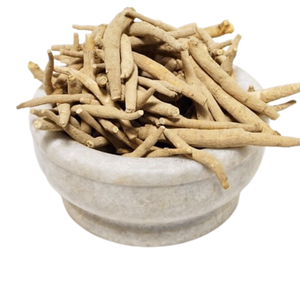
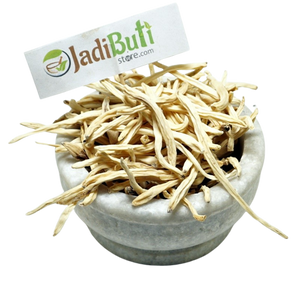
Natural Shatavari Root: Choose this form if you prefer a less-processed traditional format or are following a preparation that specifically calls for the root.
Shatavari Powder: Also commonly searched as Shatavari Churna, the powder form is more convenient for routine preparation, measuring and mixing.
Both forms come from Shatavari root. The main difference is the physical form and convenience of preparation.
How to use Shatavari Powder
Shatavari powder is traditionally used with a suitable liquid such as warm water or milk, depending on the preparation being followed. The appropriate quantity and frequency can vary by person and intended use, so follow the product directions or guidance from a qualified Ayurvedic or healthcare professional.
Natural Root should be prepared according to the recipe or traditional method you are following.
Traditional Ayurvedic context
Shatavari has traditionally been regarded as a nourishing and rejuvenative herb in Ayurveda. It is especially well known in traditional women's wellness practices, although it is not inherently restricted only to women. Individual suitability varies.
Botanical and Ayurvedic references
Asparagus racemosus Willd. is accepted by Kew. Kew’s Medicinal Plant Names Services records Śatāvarī (root) against the Ayurvedic Pharmacopoeia of India. This establishes reference identity and pharmacopoeial context, not certification of the current supplier lot. Exact classical verses and optional Rasa, Guna, Virya and Vipaka are omitted without a matched primary monograph.
- Kew: accepted botanical identity
- Kew MPNS: pharmacopoeial name and root reference
- IISc Herbarium JCB: regional names
- IISc Herbarium JCB: Marathi names
Quality and buying guidance
Choose Natural Root or Powder and the required weight in the variant selector. This listing offers dried root material, not asparagus shoots, capsules or a standardized extract. Check the delivered pack for moisture, mould or foreign matter; appearance alone cannot authenticate species. Ask for current batch sourcing or testing evidence if required.
Choose an exact pack
Each link selects the listed pack option. Check the selected weight and form in the product selector and cart before checkout. Current price and availability are shown by the store selector.
| Pack option | Select this pack |
|---|---|
| 100 Grams / Natural | Select 100 Grams / Natural |
| 100 Grams / Powder | Select 100 Grams / Powder |
| 200 Grams / Natural | Select 200 Grams / Natural |
| 200 Grams / Powder | Select 200 Grams / Powder |
| 400 Grams / Natural | Select 400 Grams / Natural |
| 400 Grams / Powder | Select 400 Grams / Powder |
| 900 Grams / Natural | Select 900 Grams / Natural |
| 900 Grams / Powder | Select 900 Grams / Powder |
Identity & product details
Product at a glance
| Common name | Shatavari / Shatawar / Shatavar |
|---|---|
| Hindi & Sanskrit | शतावरी |
| Botanical name | Asparagus racemosus Willd. |
| Plant part | Root |
| Forms available | Natural Root and Powder |
| Available sizes | 100g, 200g, 400g and 900g |
| Available pack options | 100 Grams / Natural; 100 Grams / Powder; 200 Grams / Natural; 200 Grams / Powder; 400 Grams / Natural; 400 Grams / Powder; 900 Grams / Natural; 900 Grams / Powder |
Verified names
| Language | Name |
|---|---|
| Hindi | शतावरी / Satawar |
| Sanskrit | Śatāvarī / Shatavari |
| Tamil | Thanneervittan kizhangu |
| Telugu | Pilli gaddalu / Pilli Teegalu |
| Malayalam | Sathavari |
| Marathi | Shatavari / Satavari |
Regional names vary and may overlap between plants. Match the botanical name and root form when buying.
Storage & precautions
Storage
Keep Shatavari Root and Powder in a clean, dry and airtight container away from direct sunlight, moisture and strong odours.
Important precautions
Consult a qualified healthcare professional before using Shatavari if you are pregnant, breastfeeding, taking medicines, managing a medical condition or intending to use it therapeutically.
Your questions, answered
Frequently asked questions
What is Shatavari?
Shatavari is the common Ayurvedic name for Asparagus racemosus. The root is the part commonly used in traditional preparations.
What is the difference between Shatavari Root and Shatavari Powder?
They are two forms of the same herb. Natural Root is less processed, while Powder is easier to measure and mix for routine preparations.
How do you take Shatavari Powder?
It is traditionally mixed with a suitable liquid such as warm water or milk. Follow the product directions or professional guidance for the quantity and frequency appropriate to your situation.
How long does Shatavari take to work?
There is no reliable universal timeline because intended use, preparation, quantity and individual response vary. Shatavari should not be presented as a quick-result or guaranteed-treatment product.
What is Shatavari traditionally used for?
In Ayurveda, Shatavari has traditionally been used in nourishing and rejuvenative wellness practices and is particularly associated with women's wellness. This traditional context is not the same as a medical treatment claim.
What are Shatavari’s other names, and which plant part is sold?
Shatavari is also written as Shatawar, Shatavar and Satavari. Verified regional names appear above. This listing sells dried root in Natural Root and Powder forms, in 100 g, 200 g, 400 g and 900 g packs.
Can Shatavari be used during pregnancy, breastfeeding or while taking medicines?
These situations require individual medical consideration. Consult a qualified healthcare professional before use.
Note: This information is provided for general educational and traditional-use purposes and is not a substitute for medical diagnosis or treatment.
Explore single herbs and available forms · Ask about product identity, form or pack documentation
 Ashwagandha
 Arjun Chaal
 Bhoot Kesari / Beg Kharfas
 Paneer Doda / Indian Rennet Fruit
 Reetha (Soapnut)
 Karanj Seed